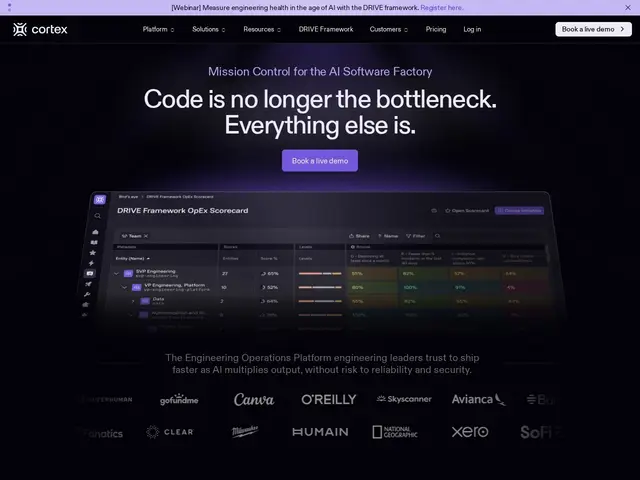
Internal developer platform that auto-maps a company's services into a catalog and uses scorecards to track production readiness, compliance and AI-adoption impact.
cortex.io
As a company grows past a handful of engineers, nobody can keep track anymore of which team owns which service, which ones are actually production-ready, or how to spin up a new one the "right" way — so people either ask around on Slack or copy-paste an old project and hope for the best. Port is a shared, searchable map of everything a company builds, plus self-service buttons for the common requests ("give me a new service", "provision this database") that would otherwise become a ticket to a platform team. Port is a platform engineering / internal developer portal product providing a software catalog and "Context Lake" that automatically maps an organization's services and environments, self-service Actions for provisioning infrastructure or running workflows with built-in approvals, Scorecards for measuring service quality and compliance, and AI agents that can autonomously handle tickets or incident remediation with governance controls. It integrates with 100+ tools (GitHub, Jira, Slack, Kubernetes, Terraform) and is used by companies including GitHub, Banco de Chile and BT.
| # | Tool | Best for | Price |
|---|---|---|---|
| 1 | Engineering leaders, CTOs, platform engineering and SRE teams at large organizations needing service-quality visibility across many teams | — | |
| 2 | Développeurs | — | |
| 3 | Développeurs | Administrateurs système | — | |
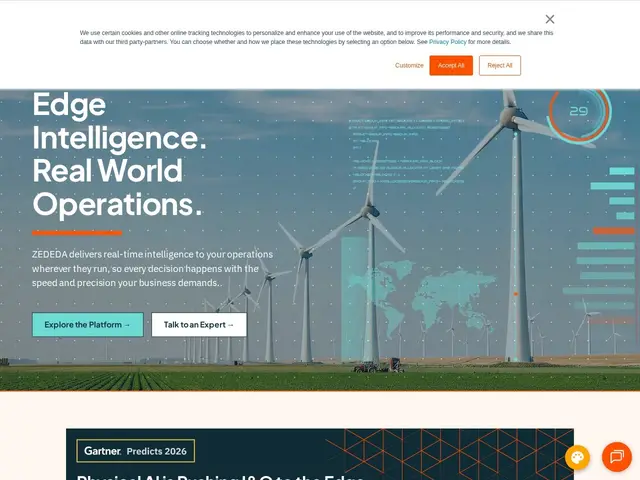
| 4 | Enterprises deploying compute and AI inference at physically distributed edge locations (manufacturing, logistics, retail, energy) | — | |
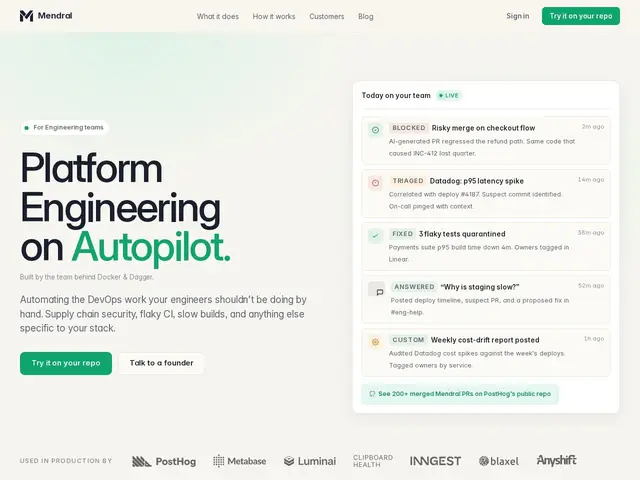
| 5 | Engineering and platform/DevOps teams wanting continuous, automated CI/CD and incident monitoring | — | |
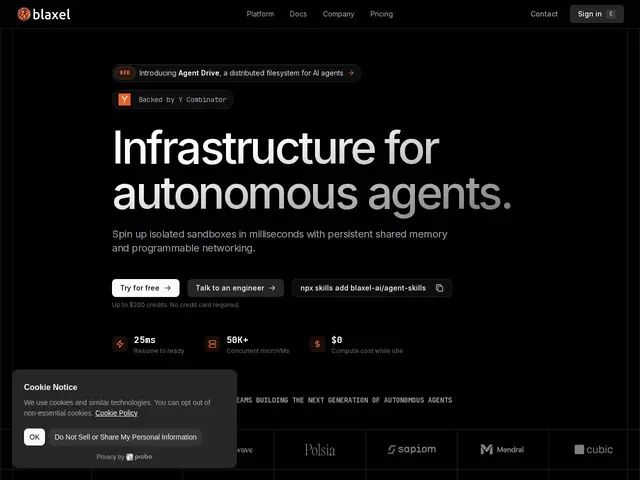
| 6 | Teams building and deploying autonomous multi-agent AI systems at scale | — | |
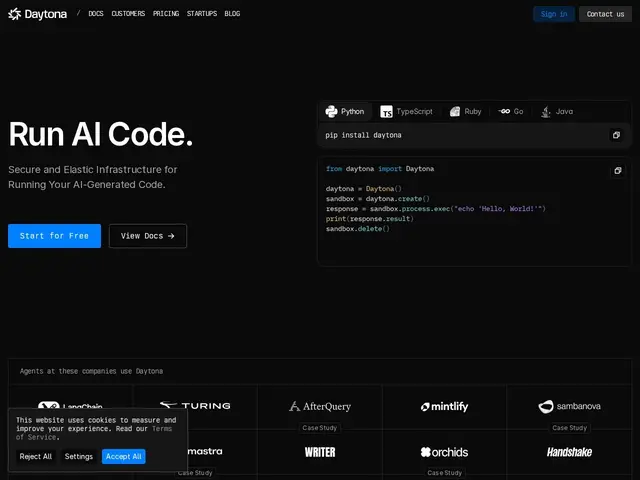
| 7 | Teams building AI coding agents, LLM code interpreters, or automation platforms that need to safely execute AI-generated code | Companies building data-analysis or automation copilots | — | |
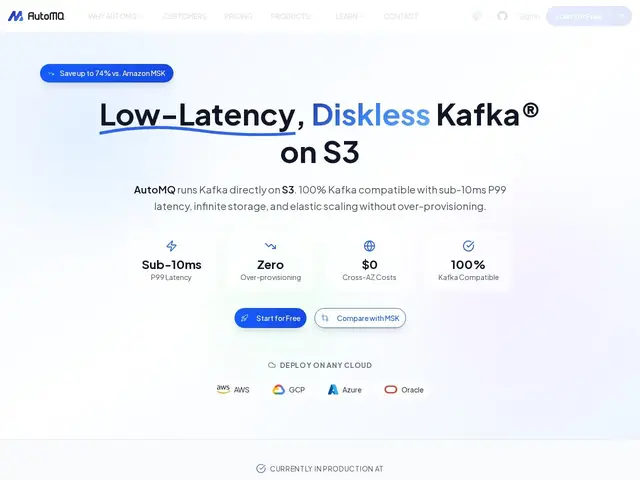
| 8 | Platform and infrastructure teams running Apache Kafka who want lower cost and simpler operations | Companies needing automatic scaling without manual Kafka capacity planning | — | |
| 9 | AI engineers | Development and DevOps/SRE teams | Product managers | — | |
| 10 | DevOps teams | Platform engineers | SaaS vendors with multi-tenant deployments | — |
Internal developer platform that auto-maps a company's services into a catalog and uses scorecards to track production readiness, compliance and AI-adoption impact.
Edge orchestration platform that remotely manages, secures and updates AI inference and applications across thousands of distributed edge devices.
AI DevOps agent that watches your CI/CD pipeline, investigates failures, reviews code and triages incidents around the clock.
Cloud infrastructure for running autonomous AI agents at scale, with millisecond sandbox startup and near-zero idle cost.
Sandboxed cloud execution infrastructure for AI agents to safely run code in under 90ms, across Python, TypeScript, Go, Ruby and Java.
Kafka-compatible streaming platform that runs diskless on cloud object storage (S3/GCS/Azure Blob), cutting Kafka's infrastructure cost sharply while keeping full API compatibility.
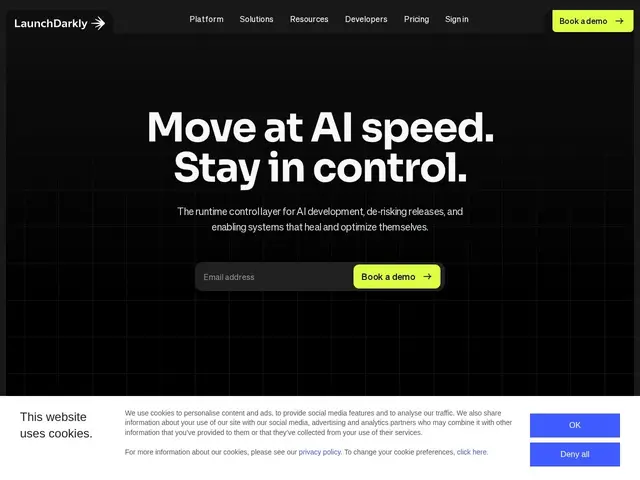
Feature flag and release management platform letting teams turn features on or off in production instantly, without redeploying code.
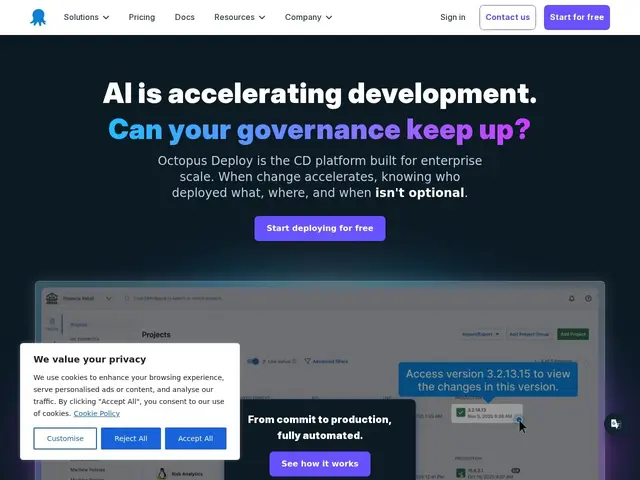
Deployment orchestration that picks up where CI stops: promotes releases across environments, multi-tenant, with runbooks.