programming Data & Analytics — 8 tools curated by the community. Most popular: Tonic.ai, Artie, Statsig. Each tool comes with a review, tags and alternatives to help you choose.
❓ Frequently asked questions about Data & Analytics
What is Data & Analytics?
Data & Analytics groups 8 tools curated by the mySelectas community. Most popular: Tonic.ai.
What are the best free Data & Analytics tools?
mySelectas lists several free options in this category. See in particular: Tonic.ai, Artie, Statsig.
The short version: Tonic.ai is a mature, well-funded ($35M+ raised) player solving a genuinely common pain point — dev and staging environments either running on stale toy data or, worse, a risky copy of real production data — and its multi-product spread (Structural, Fabricate, Textual) covers more of that problem than a single-purpose synthetic-data tool.
The main thing to weigh is scope: Tonic's case-study numbers (75% faster test-data generation, 8PB reduced to 1GB, and similar) are the company's own reported outcomes rather than independently audited figures, so treat them as directional…
👥 Target audience
Équipes d'ingénierie et data ayant besoin de données de test réalistes sans exposer de données réelles
🌍 Target countries
Monde
🗣️ Available languages
EN
🔄 Alternatives
Gretel (racheté par NVIDIA)K2viewManual data masking scripts
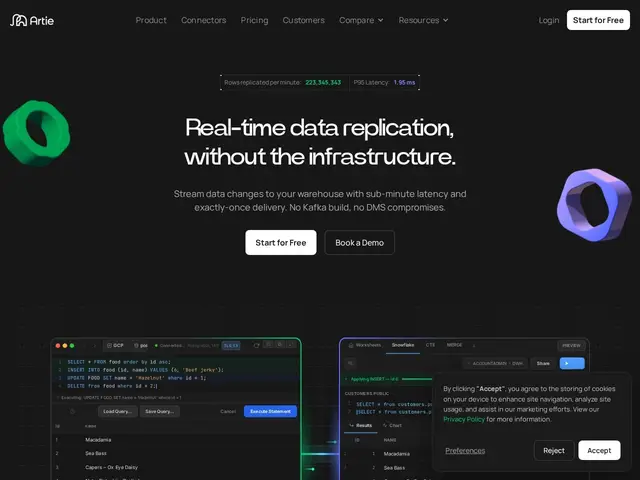
The short version: Artie is for data teams who want real-time-ish data warehouse sync without the multi-week project of standing up and operating Kafka and Debezium in-house.
The pitch against building it yourself is legitimate — CDC pipelines built on raw Debezium are notoriously fiddly to keep running reliably (schema drift breaks things constantly), and Artie's managed approach with automatic schema evolution handling removes a real operational burden. Compared to Fivetran or Airbyte, which cover CDC as one connector among hundreds of general-purpose ETL sources, Artie is narrower and more…
👥 Target audience
Data engineering and platform teams needing real-time database-to-warehouse replication | Analytics and AI teams that need fresh data without building CDC infrastructure
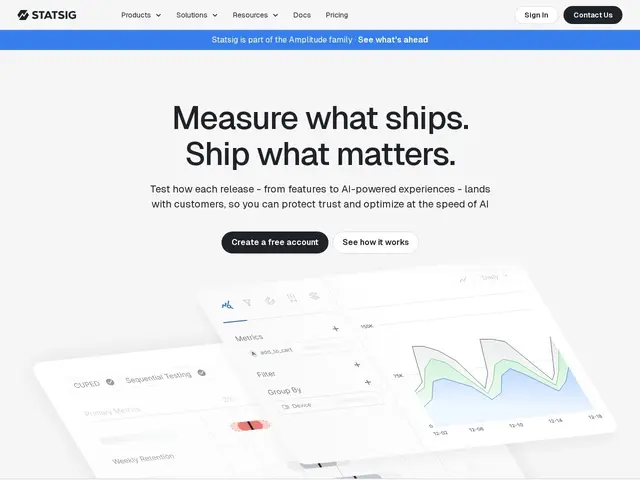
The short version: Statsig's bet is that feature flags and experimentation shouldn't be separate from analytics — you flip a flag and immediately see, in the same tool, whether it moved the metrics you care about, instead of exporting data to a BI tool afterward.
Warehouse-native experimentation is the standout feature here: running statistical experiment analysis directly against a company's own Snowflake or BigQuery data, rather than routing everything through a proprietary event pipeline, is a meaningfully different architecture from LaunchDarkly's flag-first approach and appeals to data t…
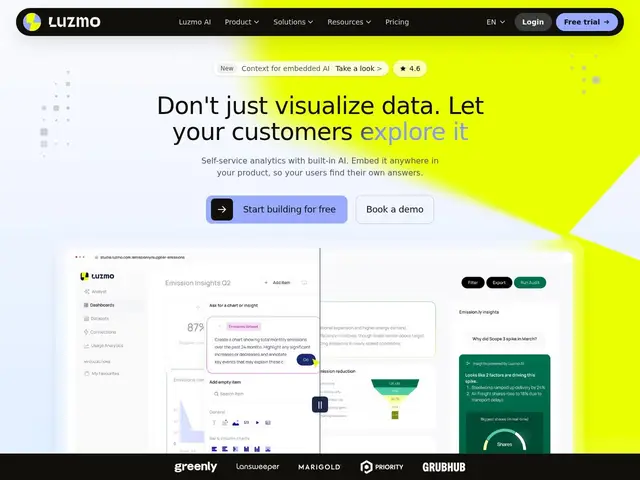
The short version: Luzmo saves a product team the months of engineering it would take to build embedded, multi-tenant dashboards from scratch — the price is steep enough that it only makes sense once analytics is actually a product feature customers rely on, not a nice-to-have.
The web-component/SDK embedding approach genuinely beats the iframe-based embedding older BI tools default to — it means dashboards can inherit the host app's styling and feel native rather than looking like a bolted-on external tool, and row-level multi-tenant security is exactly the feature a SaaS company needs but a…
👥 Target audience
SaaS product teams | Companies embedding customer-facing analytics
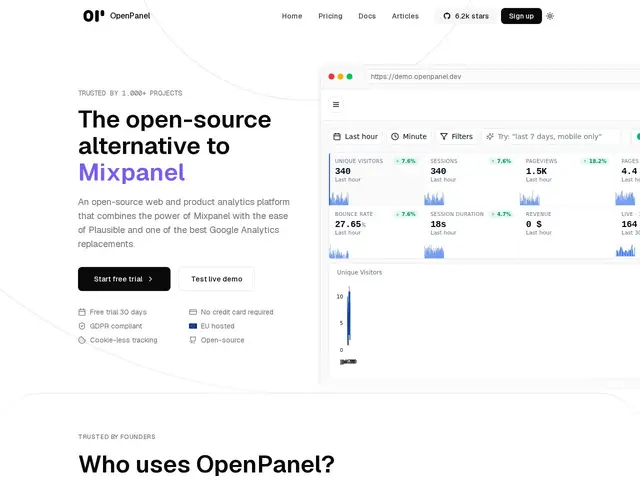
The short version: if you want Mixpanel-grade product analytics without Mixpanel-grade pricing or a giant vendor holding your user data, OpenPanel's free self-hosted option is a genuinely strong deal.
OpenPanel's pitch — one tool instead of stitching Plausible (privacy) plus Mixpanel (product analytics) plus a BI dashboard — is ambitious but the feature list backs it up: funnels, cohorts, session replay and revenue tracking are usually split across multiple paid tools. Self-hosting with unlimited events at zero license cost is the standout value proposition versus Mixpanel, whose usage-based …
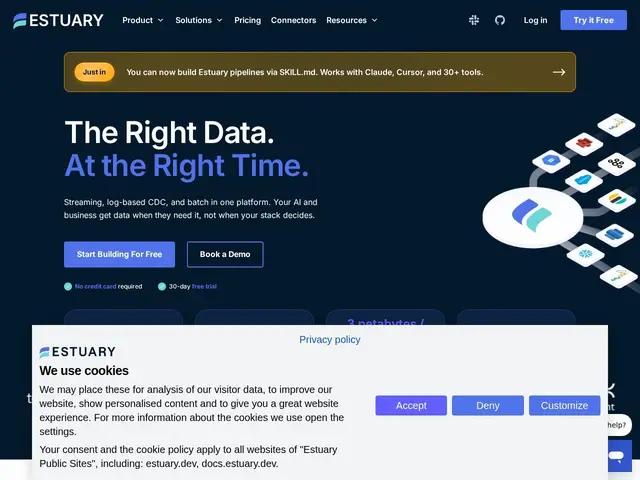
The short version: for teams that need data changes reflected elsewhere within seconds rather than hours, Estuary is a serious CDC-plus-streaming option with a genuinely usable free tier to start.
Estuary's positioning — CDC, streaming and batch unified in one platform instead of stitching together Debezium, Kafka and a separate batch ETL tool — addresses a real integration-complexity problem, and sub-100ms latency claims put it in the same tier as dedicated streaming infrastructure rather than batch-ETL-with-a-faster-cron-job. 200+ managed connectors and BYOC deployment for regulated industr…
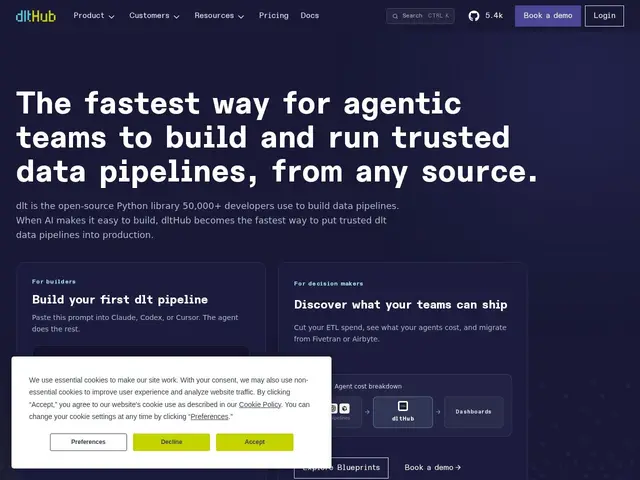
The short version: if your team writes custom Python scripts to move data into a warehouse, dlt replaces that boilerplate with a maintained library, for free — and it's become the default answer for teams that want ETL as code rather than a GUI tool.
dlt's appeal is being a library, not a platform: it drops into an existing Python codebase, an Airflow DAG, or a serverless function, rather than demanding you adopt a new UI-driven tool. Automatic schema inference and evolution — the part that traditionally breaks pipelines when an API adds a field — is the genuine time-saver here, and 5.6k GitH…
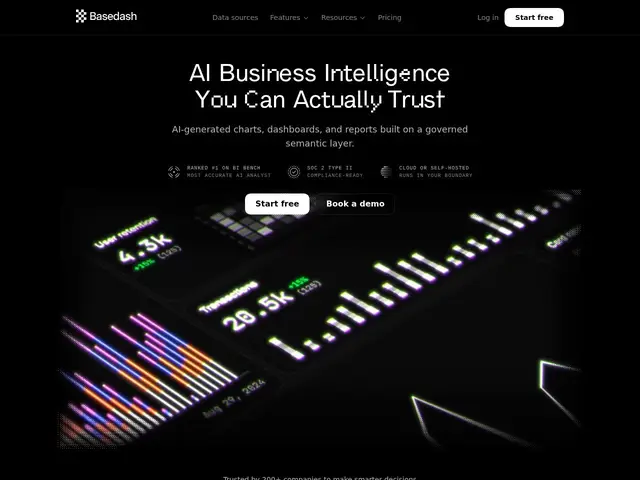
The short version: a credible 'ask your data anything' tool for mid-size companies — but at $1,000 a month, small teams should start with free alternatives first.
Basedash gets the hard part of AI BI right conceptually: raw text-to-SQL is a demo, not a product, because nothing stops the model from inventing a revenue definition per question. Anchoring generation to a governed semantic layer of verified metrics is the correct architecture, and flat-rate pricing including 25 users counters the per-seat creep that makes classic BI expensive precisely when adoption succeeds. SOC 2, row-level secu…
👥 Target audience
Mid-size companies without analysts | Ops & business teams