Xpanner
Retrofit kit that bolts onto existing construction equipment — cranes, pile drivers, solar installers — to make it operate autonomously, instead of building new robots from scratch.
🔗 Visit Xpanner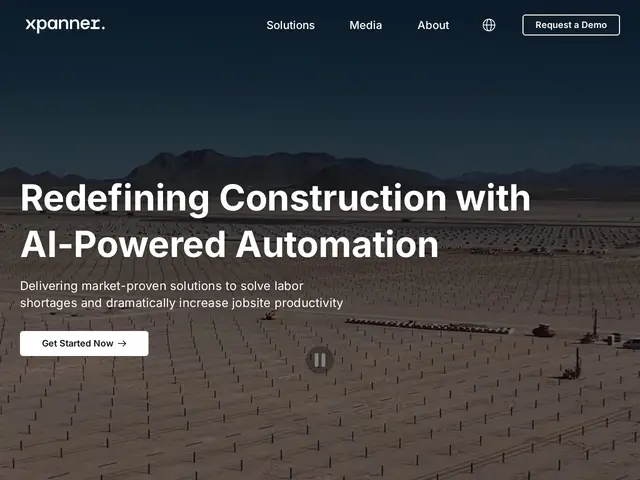
Description
Construction sites face a real labor shortage, but replacing existing heavy equipment with all-new autonomous machines would cost a fortune and take years. Xpanner takes a cheaper, faster path: it builds a retrofit kit that attaches to equipment a company already owns, adding sensors and control software that let the same machine operate with less direct human operation, rather than replacing it entirely. Xpanner's X1 Automation Kit adds machine control and "Physical AI" autonomy to existing equipment across brands and models, with specific configurations for solar panel installation (X1 Panel Lift) and pile driving (X1 Piling). It's sold as automation-as-a-service — Xpanner installs, trains crews, and provides ongoing field support rather than a one-time hardware sale — with live deployments across several US states and a partnership with Black & Veatch on utility-scale solar projects.
💬 Our review
The short version: Xpanner's retrofit-not-replace approach is the more pragmatic bet in construction robotics — a construction company doesn't have to write off existing equipment or make a huge capital purchase to get automation, which lowers the real barrier to adoption versus a from-scratch robotic machine.
The automation-as-a-service model (installation, training and ongoing support included, rather than a hardware sale a company then has to figure out on its own) matters in an industry where crews aren't robotics engineers — support that doesn't disappear after the sale is a real practical consideration for adoption at scale. A Black & Veatch partnership on utility-scale solar and named deployments across multiple US states suggest this has moved past pilot-stage hype into actual field use, which is meaningfully further along than many "construction robotics" companies get. One honest note from research: the homepage displayed what looked like a rendering bug on its performance metrics ("Up to 0% saved"), so don't take any specific time/cost/labor-savings figure at face value from the public site — ask for real deployment data directly in a sales conversation instead. Against pure-robotics competitors like Built Robotics or Boston Dynamics-style ground-up autonomous machines, Xpanner's retrofit approach is the lower-cost, faster-to-adopt path for a company that already owns compatible equipment; a company building an entirely new autonomous fleet has different tradeoffs to weigh.
💰 Pricing
📊 Global score
🤖 AI-enriched data
Pros
Retrofits existing equipment rather than requiring all-new robotic machines
Automation-as-a-service includes installation, training and ongoing support
Named deployments across multiple US states plus a Black & Veatch partnership
Well-funded ($38M total) with profitability reportedly reached within 20 months
Cons
A specific performance-metrics section on the homepage appeared to be a rendering bug — don't trust public-site figures without asking directly
Retrofit approach only works on equipment compatible with the X1 kit, not a universal solution
🔄 Alternatives to Xpanner
See all alternatives to Xpanner →❓ Frequently asked questions
- Does Xpanner sell new robots, or upgrade equipment I already own?
- It retrofits equipment a construction company already owns with sensors and control software (the X1 kit), rather than requiring a purchase of entirely new autonomous machines.
- What kind of support comes with it?
- It's sold as automation-as-a-service — Xpanner handles installation, crew training and ongoing field support, not a one-time hardware sale.
- Is it actually deployed on real job sites, or still in pilot testing?
- It has live deployments across several US states and a partnership with Black & Veatch on utility-scale solar projects, suggesting real field use beyond early pilots.
- Is it worth the money compared to alternatives?
- For a company with compatible existing equipment facing labor shortages, retrofitting is likely cheaper and faster to adopt than buying all-new autonomous machines — but get real performance data directly from Xpanner in a sales conversation, since the public site's own metrics appeared unreliable during research.
- Which tool should you pick for your case?
- Have existing equipment you want to automate without replacing it: Xpanner. Building an entirely new autonomous equipment fleet from scratch: a ground-up robotics vendor like Built Robotics.